
Yozgat's 224-year-old Başçavuş Mosque: its hand-painted ceiling still stands
Başçavuşzade Mosque, in Yozgat's central İstanbulluoğlu neighborhood, remains open for worship 224 years after its construction and continues to be one of the city's most distinctive historic buildings thanks to its hand-painted decorations. The mosque was built in 1800-1801 (AH 1215) by Halil Ağa, the head sergeant of Çapanoğlu Süleyman Bey.
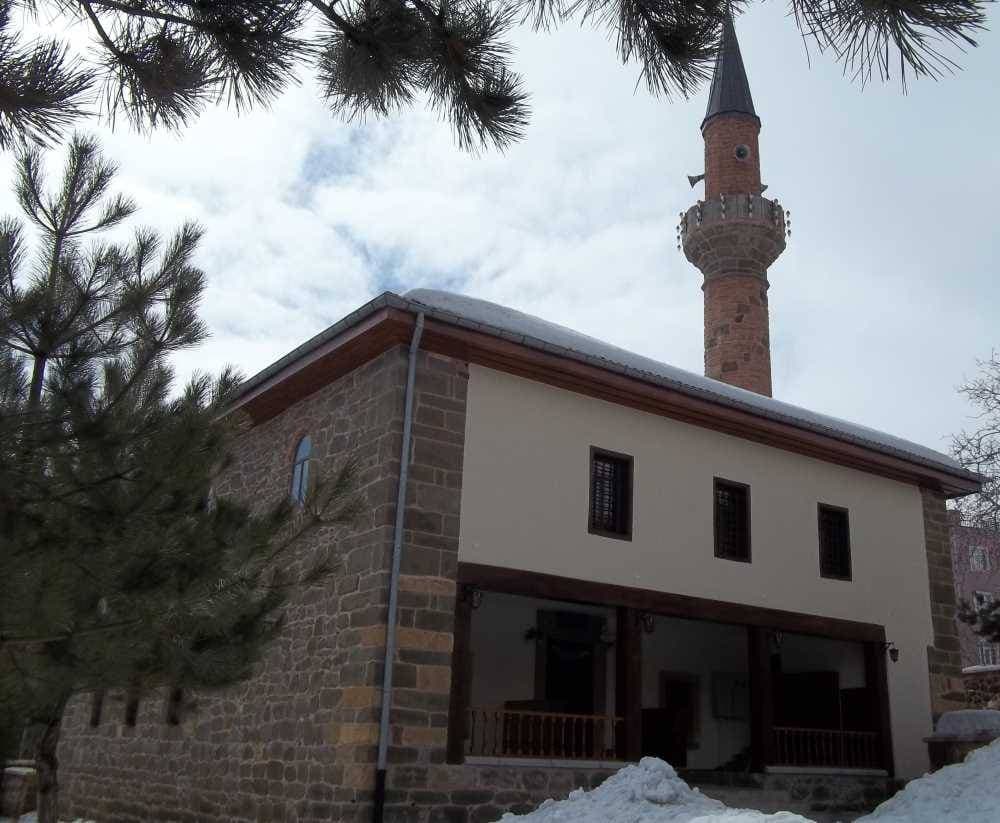
In the history of Yozgat, shaped under the rule of the Çapanoğlu family, it was common for the family's senior officials to also have mosques built in their own names. The structure commissioned by Halil Ağa is considered one of the best-preserved examples of this tradition to survive to the present day.
A wall rising from stone and brick
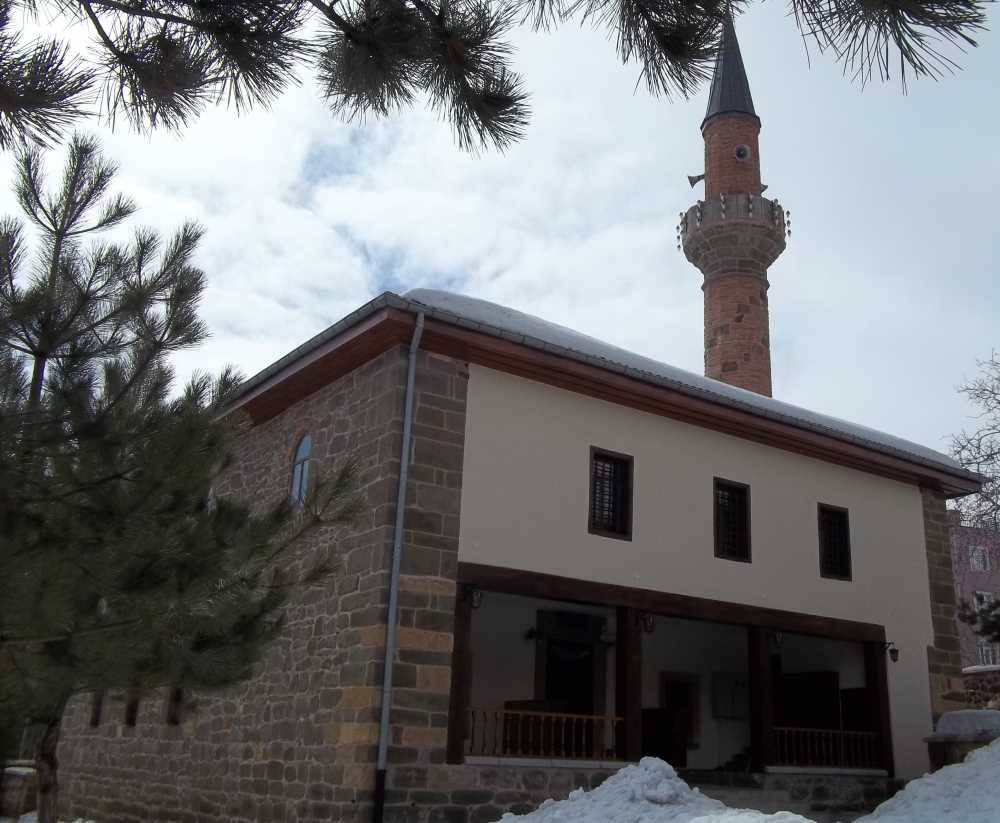
The mosque was built using both stone and brick, covered with a hipped roof, and features a round-bodied minaret with a single balcony. The rectangular prayer hall has three windows each on the east and west walls, and two each on the north and south walls. With its spacious courtyard, the structure remains at the scale of a neighborhood mosque, more modest in volume than the large-scale Çapanoğlu Mosque nearby.
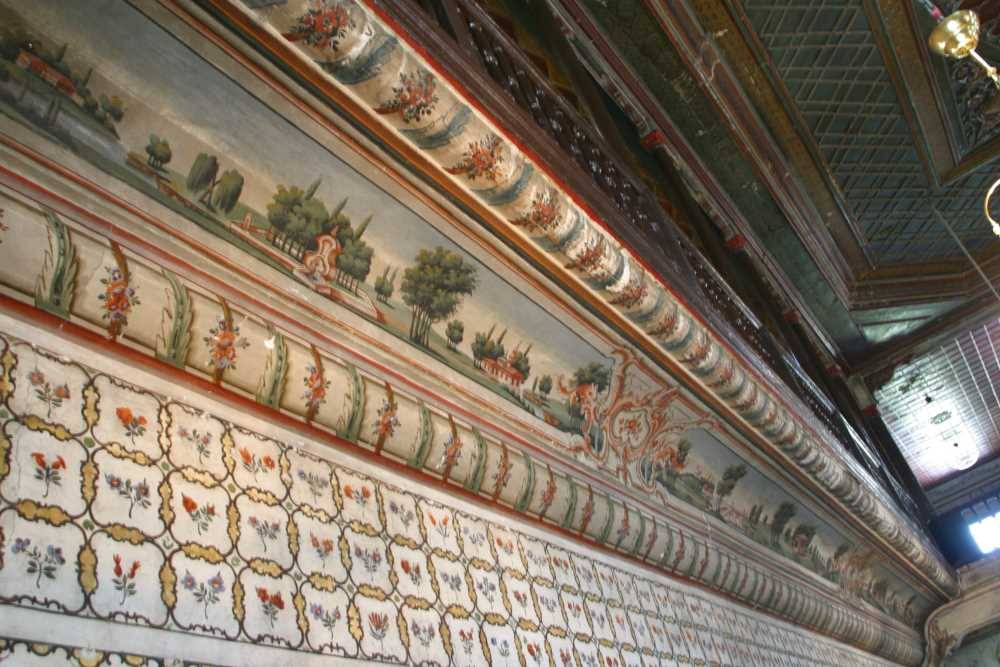
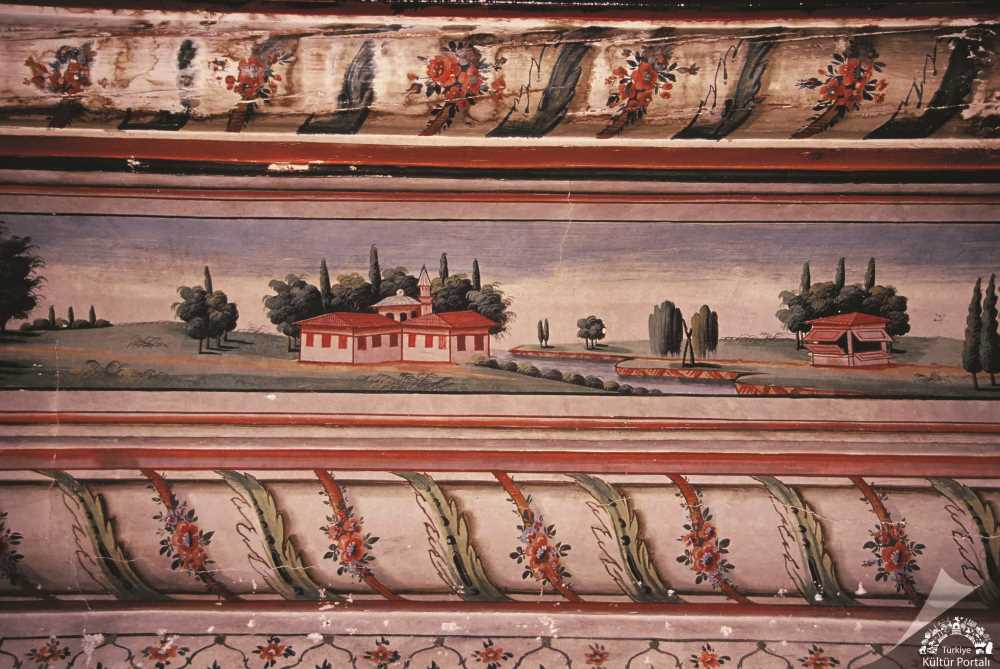
The mosque's real value, however, lies in its interior. The prayer hall's ceiling and its upper and lower walls are covered from end to end with hand-painted decoration; around the semicircular niche-shaped mihrab, the wooden cornice beneath the upper galleries carries strip landscape paintings depicting rural buildings, pavilions, bridges and mills.
According to art historians, this density of hand-painted decoration and wall painting is not found in most 18th- and 19th-century Anatolian mosques; the ornamentation is embellished with "S" and "C" scrolls, acanthus leaves and floral motifs, reflecting the Westernization influence that entered Ottoman art after the Tulip Era.
Geometric craftsmanship in the wooden ceiling
The mosque's wooden ceiling also draws separate attention. The geometric latticework formed by radially arranged wooden strips reveals the building's early-19th-century carpentry craftsmanship.
The fact that it was built by the head sergeant of Süleyman Bey, who also had the outer section of Çapanoğlu Mosque built, strengthens the link between the two structures; however, since the inner section of Çapanoğlu Mosque was built by Mustafa Bey in 1779 and the outer section by his brother Süleyman Bey in 1793-94, the two mosques had separate construction processes. Smaller in scale, Başçavuşzade Mosque is regarded by art historians as comparable to Çapanoğlu Mosque in the richness of its ornamentation.
Still open for worship with its congregation today, the mosque is the second stop for those visiting Yozgat after Çapanoğlu Mosque. Its proximity to the city center and its distinctive decorations make it one of the important stops of local cultural tourism.